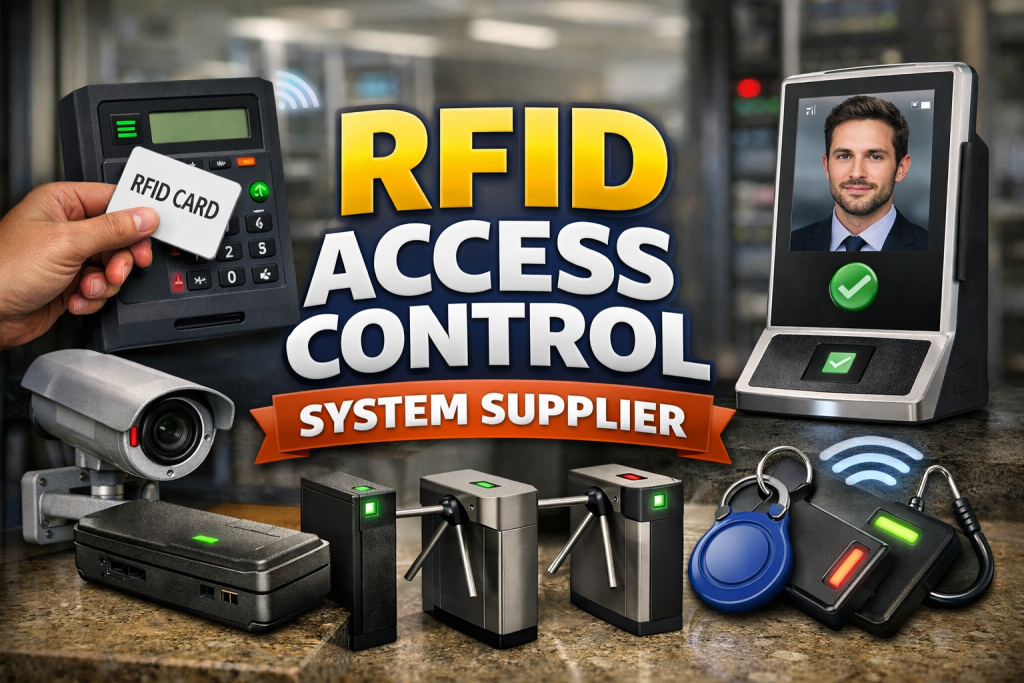
Seeking for RFID access control supplier KL & Selangor is no longer a luxury reserved for multinational corporations or government buildings—it has become a critical necessity for businesses, condominiums, and industrial facilities across the Klang Valley.
As businesses recover and expand into hybrid working models, the need for touchless, efficient, and trackable entry systems has skyrocketed. Professional consultation from supplier ensures that your system is not just a lock-and-key replacement but a fully integrated security ecosystem that manages who enters, when they enter, and where they can go.
Therefore, RFID Access Control has quietly become the invisible gatekeeper for thousands of properties across Malaysia. It has become a critical security backbone for offices, factories, warehouses, and even residential strata properties.
What Is RFID Access Control System?
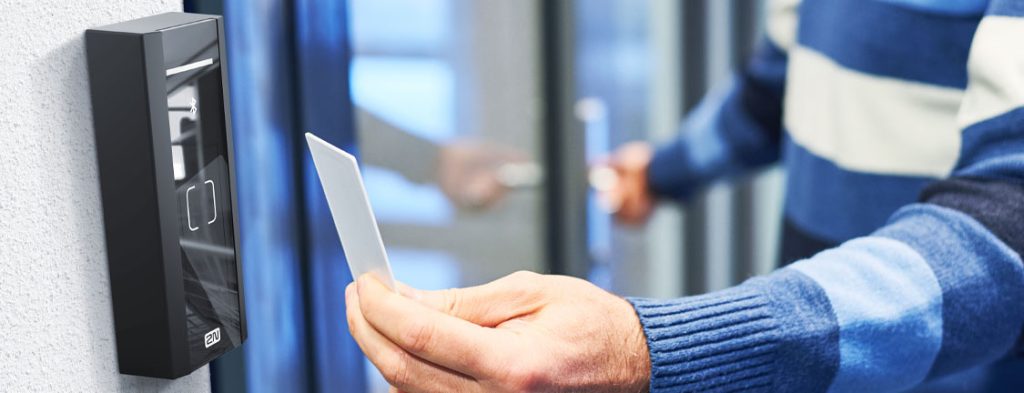
At its core, RFID (Radio-Frequency Identification) access control replaces traditional mechanical keys with credential-based entry. Instead of fumbling for a key, a user holds a card, key fob, or even a sticker near a reader. The reader captures the unique ID from the RFID tag, sends it to a central controller, and—if authorized—unlocks the door or turnstile.
But professional installation goes far beyond mounting a reader on a wall. It involves:
- Site assessment: Identifying vulnerable entry points and traffic flow.
- Controller programming: Setting time zones, access levels, and anti-passback rules.
- Cabling and networking: Connecting readers to controllers via reliable, encrypted wiring or PoE (Power over Ethernet).
- Integration: Linking the RFID system with fire alarms, CCTV, and HR software for automated access updates (e.g., revoking a terminated employee’s access instantly).
Why RFID Access Control Matters?

1. The Touchless Imperative (Post-COVID Hygiene)
RFID allows a user to wave a card or fob within 2-5 cm of a reader without any physical contact. Modern readers even support wave-to-open without pressing a button.
2. Real-Time Audit Trails & Forensic Security
A basic keypad logs nothing. A modern RFID system records every single event: which credential was used, at which reader, at what exact timestamp. This becomes invaluable during security incidents.
3. Instant Revocation Without Changing Locks
The single greatest weakness of physical keys is that once copied or lost, the only solution is rekeying every single lock—costing thousands of ringgit and hours of labor. With RFID, when an employee resigns, a tenant moves out, or a contractor completes their project, their card can be deleted from the system in under 10 seconds via software. That card becomes a useless piece of plastic.
4. Granular Time & Zone Restrictions
RFID systems allow you to define precisely who can go where and when. Examples:
- A cleaner’s card works only on Floor 3, only between 6 PM and 10 PM.
- A security guard’s card works on all doors, but only during their assigned shift.
- An intern’s card is automatically disabled after their contract end date.
- A delivery driver’s temporary credential expires after 2 hours.
5. Integration with Other Building Systems (Convergence)
Modern RFID is not isolated. It integrates with:
- HR systems: New employee added in payroll → RFID card automatically issued and assigned permissions.
- Visitor management systems: Guest checks in at lobby → temporary QR code or RFID visitor card printed with elevator floor restrictions.
- Time & attendance: Swipe at entrance automatically records clock-in time.
- Fire alarm integration: When fire alarm triggers, all RFID magnetic locks automatically release to allow evacuation.
What RFID Access Control Can Be Utilized?
Malaysia’s unique economic and demographic landscape creates specific use cases where RFID delivers exceptional value. Below are detailed applications across different sectors:
1. Residential Condominiums
With over 1.2 million strata residential units in Malaysia and rising, gated communities and high-rise condos face constant security challenges. RFID solves:
- Lift access control: Restrict floor-by-floor access so residents can only press their own floor or common amenities.
- Swimming pool & gym: Prevent non-residents from using facilities (a common complaint in Airbnb-heavy buildings).
- Visitor management: Integrate with intercom systems so guests call residents, residents press “1” on phone to unlock the main gate remotely.
- Parking control: UHF long-range readers (up to 8 meters) allow barriers to lift automatically as a car approaches, without winding down windows in the rain.
- Tenant turnover: When a tenant moves out, delete their fob instantly—no need to change locks and collect keys from 50 units.
2. SME Offices & Co-Working Spaces
Small and medium enterprises typically lack full-time security guards. RFID provides enterprise-grade control at SME budgets:
- After-hours access: Sales teams working late can enter, but cleaning staff cannot enter the finance room.
- Hot-desking & meeting rooms: Link RFID to booking systems so employees tap to unlock a pre-booked meeting room.
- Server room control: Only IT personnel (2-3 people) get server room access; all others are denied and logged.
- Kitchen & pantry: Basic access for everyone, but restrict after 8 PM to prevent late-night stock loss.
3. Manufacturing & Warehouses
Factories face distinct challenges: shift changes, high turnover of foreign workers, internal theft, and safety compliance.
- Chemical storage zones: Restrict to certified personnel only. Log every entry and exit for DOSH compliance.
- Tool crib & spare parts lockers: Employees tap to check out expensive tools; system tracks who has which tool and when it should be returned.
- Shift handover: Use RFID to prove which supervisor was present during a night shift incident.
- Visitor contractor management: Issue temporary RFID cards to contractors that expire at 5 PM daily—they cannot linger after hours.
- Raw material gate: UHF readers on forklifts automatically record which operator moved which pallet through which gate.
4. Educational Institutions
Campuses with thousands of students need to balance security with freedom.
- Laboratory access: Chemistry labs and engineering workshops restricted to enrolled students during specific lab hours.
- Library after-hours: Graduate students get 24/7 library access via RFID; undergraduates limited to 8 AM–10 PM.
- Dormitory security: Each student’s card unlocks only their own floor. Parents and external visitors must check in at guardhouse.
- Examination halls: During exam week, only students with active exam registration can unlock specific classrooms.
5. Construction Sites
Construction sites are fluid environments with hundreds of daily workers from multiple subcontractors.
- Heavy machinery zones: Restrict access to certified operators only. Log who entered the excavator compound overnight.
- Material storage: Prevent theft of copper wiring, tools, and cement by requiring RFID check-in/out for high-value areas.
- Safety compliance: Link RFID to safety training database—a worker without proper harness training cannot enter the rooftop zone.
- Real-time headcount: In an emergency, the system reports exactly how many workers are inside each zone of a partially built structure.
6. Healthcare
Hospitals have uniquely sensitive zones.
- Pharmacy & drug storage: Narcotics cabinets require dual-authentication (two different RFID cards from two different nurses) to open.
- Infant ward & nursery: Only authorized maternity nurses can enter; all attempts logged with photo.
- Medical record rooms: Patient privacy laws (PDPA) require strict logging of who accessed physical files.
- Staff-only corridors: Prevent visitors from wandering into operating theater zones.
Benefits Of RFID Access Control
Beyond basic functionality, RFID delivers measurable operational and financial benefits specifically relevant to Malaysia.
1. Weather & Climate Resilience (The Malaysian Humidity Factor)
- Corrosion of internal PCB traces and connectors
- Condensation inside readers during morning temperature swings (28°C at 7 AM rising to 34°C by 11 AM)
- Fogging under the reader’s front lens, obscuring any visual indicators
2. Resistance to Physical Damage
Malaysian door environments are harsh. Security guards bump readers with carts. Cleaning staff splash water. Vandals attempt to pry or strike. RFID readers have no moving parts (unlike magnetic stripe readers which have a swipe slot that jams with dust). They can be potted in solid epoxy or housed in metal casings. Some models withstand hammer strikes and brief submersion.
3. Operational Efficiency & Queue Reduction
Consider a 500-employee office in Menara Maxis, KLCC. At 8:30 AM Monday morning, 200 employees arrive within 10 minutes. If each takes 3 seconds to swipe an RFID card, the entire queue clears in 10 minutes with no waiting.
If they used fingerprint (average 5-8 seconds with frequent read failures on sweaty fingers), the queue would stretch 20+ minutes, causing complaints and late arrivals. In a factory shift change with 1,000 workers, the difference is even more dramatic: RFID turnstiles process 30-40 people per minute versus 6-8 per minute for fingerprint.
4. Employee Accountability & Deterrence
The psychological effect of being logged matters. When employees know that every door swipe is recorded with timestamp and identity, opportunistic theft and unauthorized after-hours access drop significantly. It is not necessarily about catching thieves—it is about preventing them from attempting in the first place because the risk of detection is high.
Recommended RFID Access Control Systems
1. VLOCK V125 Standalone Access Control
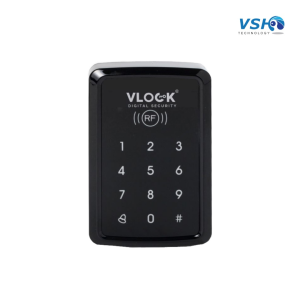
- Stand Alone Access Controller with Em reader
- Touchscreen Keypad ,1000 Cards or Pin, Card+Pin
- Support WG26, 1 Extra Reader Available
- Card Type EM/ID 125 Khz
- Support Door bell button ,DC 12 V
- Dimensions 120*78*22mm
2. VLOCK HF3(W) WiFi Access Control
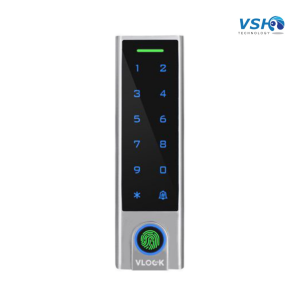
- Waterproof IP66
- Stable performance
- Wiegand input & output
- Support WiFi (Tuya App)
- Support external WG26 card reader
- Standalone card capacity up to 1,000.
- Exit button and doorbell input function.
Time Attendance Access Control Systems
3. ZKTeco SenseFace Series
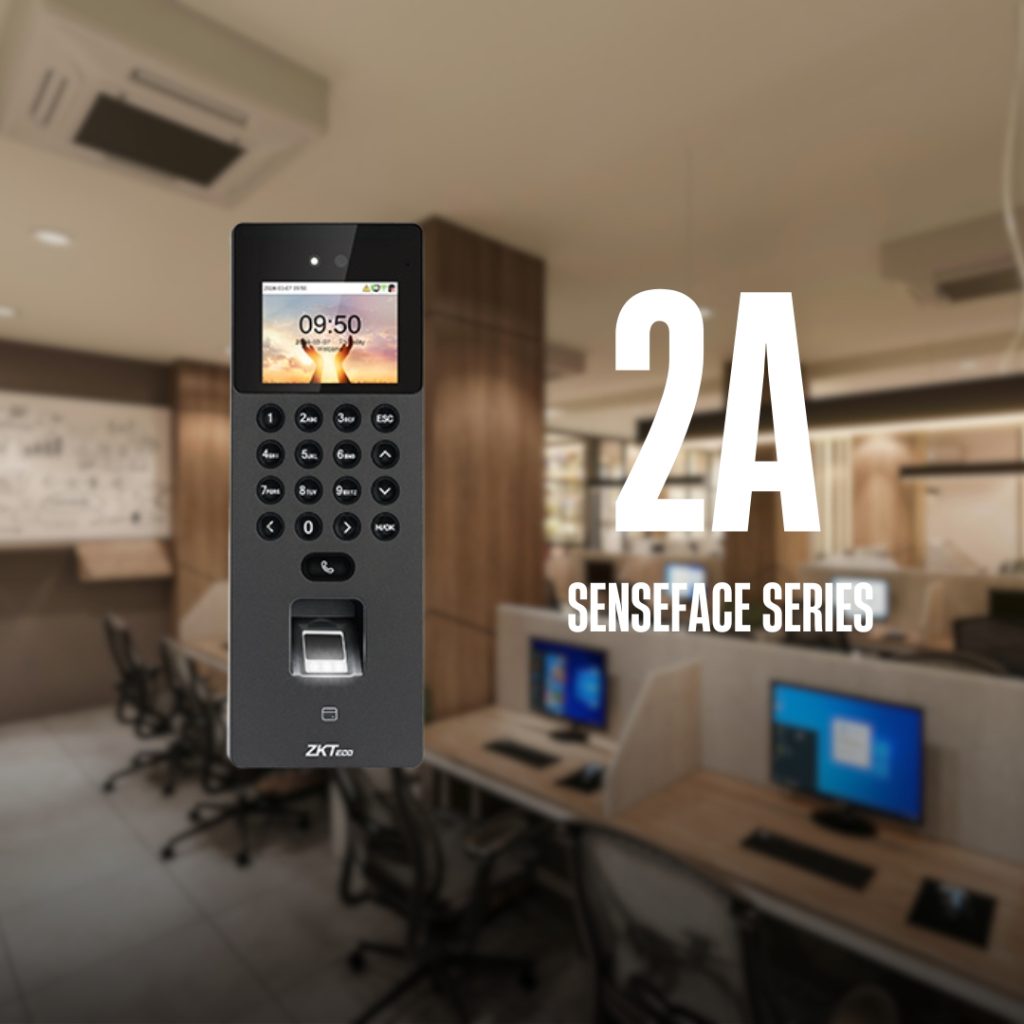
Devices available: ZKTeco SenseFace 2A, ZKTeco SenseFace 4A & ZKTeco SenseFace 7A
- Advanced Authentication: Adopts intelligent engineering facial authentication and in-glass fingerprint technology (in certain models) for fast and secure verification.
- Video Intercom Integration: Features a built-in video intercom function compatible with SIP protocol (Version 2.0) and ONVIF protocol, allowing seamless connection with indoor monitors and third-party systems.
- High-Security Anti-Spoofing: Uses an ultimate anti-spoofing algorithm to protect against fake photos and video attacks.
- Large Capacity & Speed: Supports large user and template capacities (e.g., up to 50,000 faces in the SenseFace 7 series) with facial authentication speeds of less than 0.35 seconds.
- Flexible Software Compatibility: Supports multiple communication protocols and is compatible with various software like ZKBio CVAccess, ZKBio Time, and the cloud-based ZKBio Zlink.
- Durability: Many models are IP65 certified, providing resistance against water and dust for reliable operation in various environments.
4. Hikvision Access Control With Time Attendance
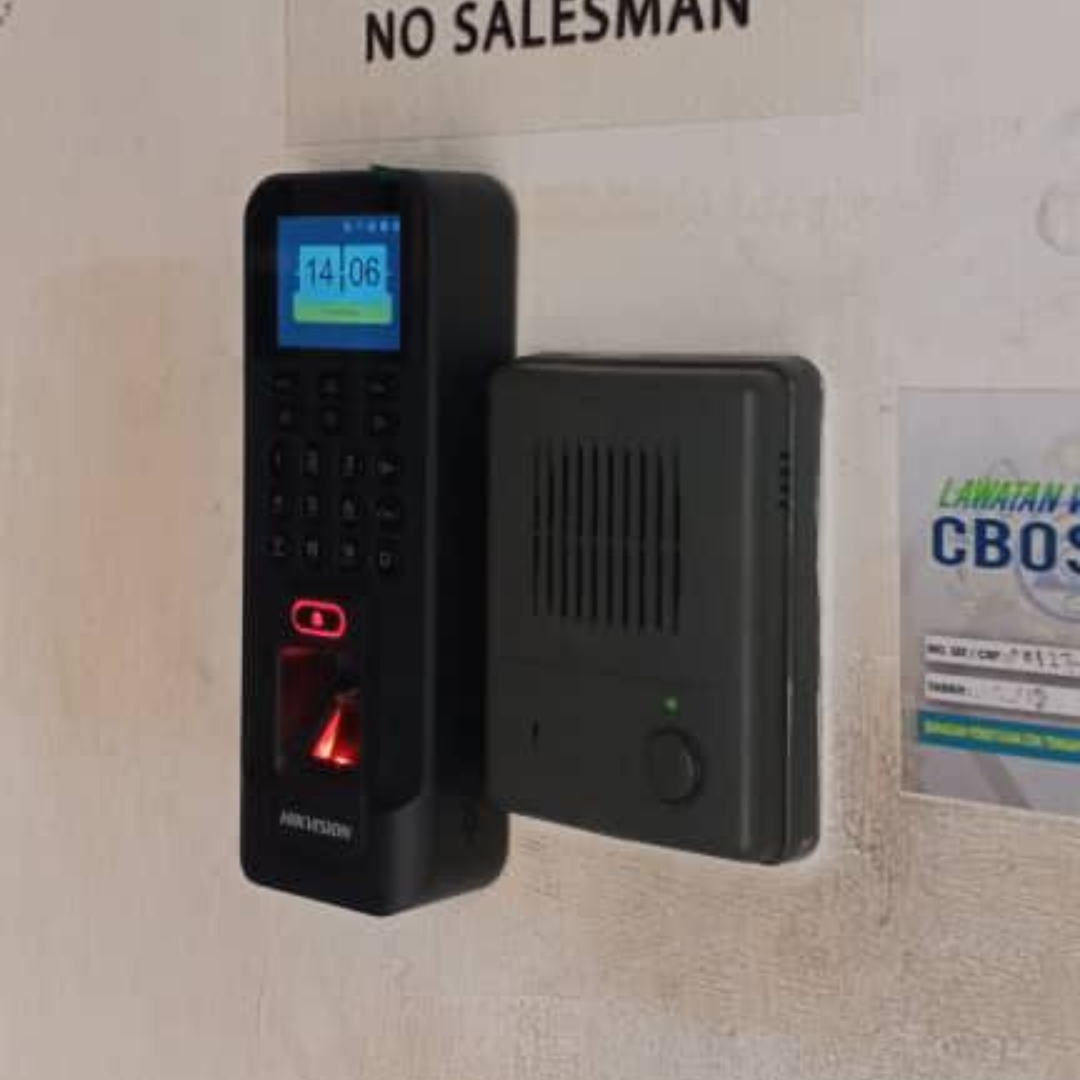
- Integrated management of access control and the time and attendance functions
- 3,000 fingerprints, 3,000 cards and 100,000 events storage
- Built-in card reader for EM card
- Communication via TCP/TP and Wi-Fi
- RS-485, wiegand interface
- Alarm input and output interface
- ISUP5.0, ISAPI
Conclusion
RFID Access Control has evolved far beyond simple door unlocking into a comprehensive, intelligent security and operations platform. Without professional installation that accounts for Malaysia’s lightning strikes, voltage fluctuations, and monsoon moisture, even the best reader will fail prematurely.
Upgrade your property security today with RFID access control supplier in KL & Selangor for peace of mind and total security from threats!
Contact us today to learn more about RFID Access Control and how we can support your enquiries.